Behind the Dance scene: Distribution – Strategy and Building Visibility for Artists
Why Distribution Matters More Than People Think
When audiences watch a dance performance, they usually see the final result: the lights, the movement, the emotion on stage. What often remains invisible is the enormous amount of work happening behind the scenes to make that performance reach the public in the first place.
For Camille, this invisible work has become both a profession and a mission.
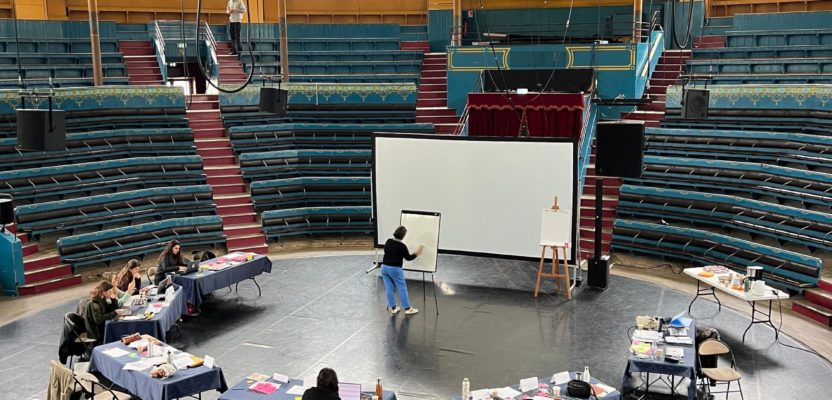
This year, she began a specialised nine-day workshop programme in France focused entirely on distribution in the dance sector, a niche but essential field that connects artists, theatres, festivals and audiences.
Organised by the Centre National de la Danse in collaboration with the Office National de la Diffusion Artistique, the programme brings together professionals working in contemporary dance from different generations and backgrounds.
“It’s the first time I’ve really been surrounded by people doing the same work as me,” Camille explains. “Distribution in dance is extremely specific. It’s a very small world.”
What Is Distribution in Dance?
The word “distribution” can sound cold or technical at first, almost corporate. But in the dance world, it carries something much more human. According to Camille, distribution is not simply about selling performances. “It’s networking, building relationships, creating visibility, understanding where a project belongs and connecting it with the right audience.”
The role stretches far beyond sending emails or booking shows.
Distribution involves strategy, communication, touring logistics, contract negotiations, artistic positioning and long-term relationship building. It starts long before a performance even premieres. “When a project is still being created, you already need to think about its future life,” Camille says. “Who will present it? Which festivals could support it? Which theatres could welcome it?”
Without strong distribution, even powerful artistic creations risk disappearing after only one or two performances. And that is precisely the gap is trying to address.
A Workshop Built on Exchange
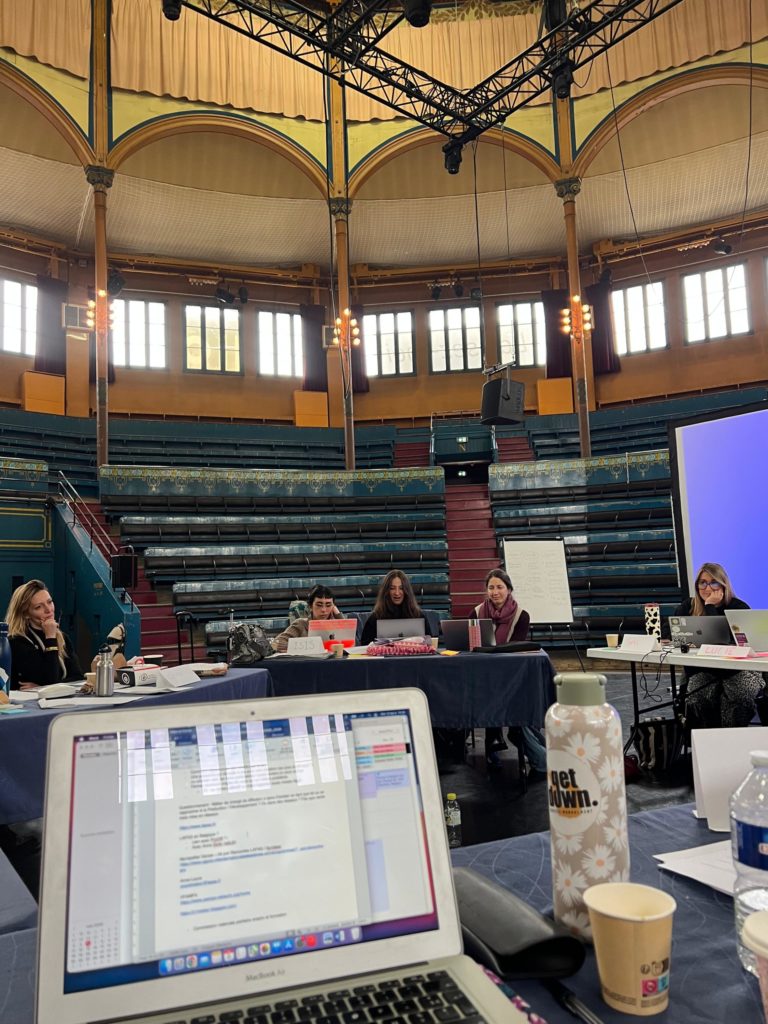
The programme organised by the Centre National de la Danse takes place across three cities in France; Paris, Reims and Roubaix, with each three-day module exploring different aspects of dance distribution. Participants meet programmers, producers, artistic directors and representatives from organisations such as the Office National de la Diffusion Artistique and Institut Français. Rather than traditional classroom teaching, the workshops are built around dialogue and shared experience. “We exchange tools, methods and doubts,” Camille explains. “Everyone is learning by doing.”
The discussions cover everything from preparing presentation files and improving pitches to understanding how programmers prefer to be contacted. One programmer may ignore newsletters completely. Another may rely on them daily. Some appreciate phone calls, while others prefer slower and more organic communication.For Camille, these exchanges have revealed an important truth: there is no single formula for working in the cultural sector. “Everyone has their own way of working. That was reassuring to realise.”
Distribution as Strategy and Sensitivity
One of Camille’s biggest takeaways from the workshops has been the importance of strategic thinking. Not every performance belongs everywhere. A project must be introduced to the right people, at the right time, in the right context. “It’s not about contacting 200 people,” she says. “It’s about contacting the right 20.” This is something she now wants to strengthen within.
For upcoming projects, such as performances in Paris and the development of new creations like Nexus by Omar, Camille is working on more precise distribution strategies: targeted invitations, follow-ups with programmers, work-in-progress presentations and stronger communication tools.
The workshops also helped her rethink the art of pitching.
A session dedicated to presentation techniques pushed her to develop clearer and more concise ways of presenting artists and projects. “You need to understand deeply what a project is about before presenting it to others,” she explains. “The pitch has to feel intentional.”
Creating Visibility for Street and Clubbing Dance Artists
At the heart of Camille’s work is a strong commitment to artists from hip-hop, street and clubbing dance cultures — communities she believes are still underrepresented within institutional cultural spaces.
According to her, Belgium still lacks dedicated distribution structures specifically supporting these artists. “There are many opportunities to create performances,” she says. “But after creation comes the challenge: how do you make the work travel? How do you make people actually see it?” This question is central to the vision of.
Camille’s background in communication and public relations, including previous work at La Monnaie / De Munt, initially pushed her toward visibility through media and communication. But over time, she realised that distribution itself was one of the strongest tools for creating lasting visibility for artists.
And for Camille, this visibility also carries a political and social dimension.
She speaks openly about the lack of opportunities and recognition still faced by women, especially women of colour in artistic spaces. “There are still limitations,” she explains. “Women are often seen as less legitimate, less capable.”
Supporting these artists is therefore not about following trends or diversity slogans. For Camille, it is about creating real opportunities, legitimacy and space for voices that are too often pushed aside.
More Than Selling Performances
One of the most striking ideas emerging from Camille’s reflections is that distribution is ultimately about relationships. Not aggressive marketing. Not pressure. Not endless self-promotion.
Relationships: A good distributor understands when to push, when to wait, when to follow up and when to listen. “You need to be strategic,” Camille says, “but also human.” That balance between structure and intuition, between planning and feeling, may be what most clearly defines her approach.
And perhaps that is exactly why her work resonates so strongly within today’s dance landscape: because behind every spreadsheet, email or contract remains the same core intention to help artists be seen, heard and remembered.
Interview made by Cindy Kwame (Communication Intern – May 2026)