Between Sand, Dance and Connections: Camille’s Journey to Biennale de la Danse in Toubab Dialaw (Sénégal) with Get Down
5 Days Journey to Toubab Dialaw (Sénégal) Through Dance
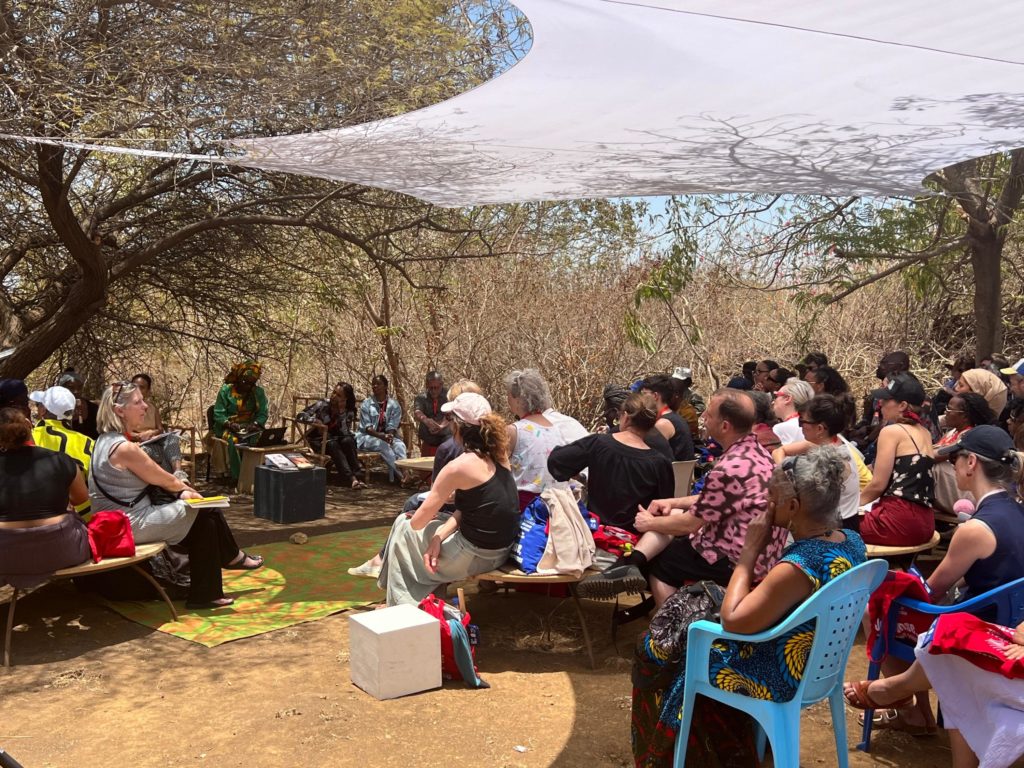
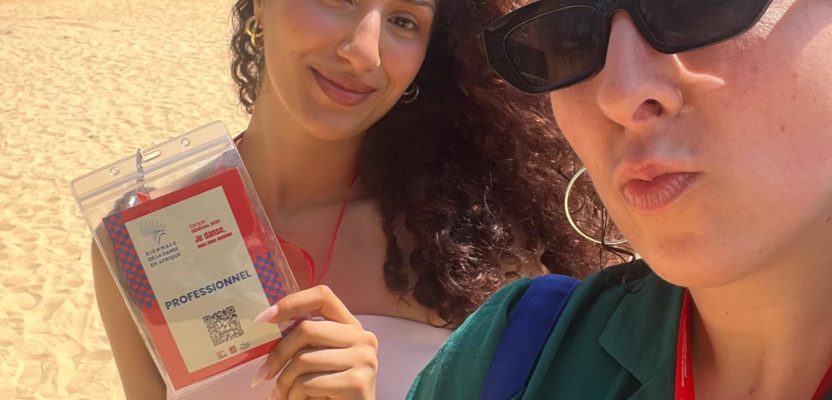
For Get Down Dancers Management, movement is never just about performance. It is also about encounter, transmission, dialogue, and community. From May 29th till May 2nd, Camille travelled to Senegal for the Biennale de la Danse in Toubab Dialaw, which was held for the first time at L’École des Sables—a symbolic and historic moment for the international dance world.
Held every two years, the Biennale brings together artists, programmers, choreographers, and cultural organisations from around the world. For Camille, the trip was about far more than watching performances. “It was important for me to be there,” she says. “To witness this moment, to experience it, to connect.”
From the moment she arrived in Senegal, something shifted. “The first thing I felt was that my nervous system slowed down completely,” Camille recalls. “I felt good immediately.” Near the coast of Toubab Dialaw, surrounded by ocean air, red sand, and the rhythm of daily life, she found an atmosphere that felt calm, grounded, and deeply human.For Get Down Dancers Management, movement is never just about performance. It is also about encounter, transmission, dialogue, and community. From May 29th till May 2nd, Camille travelled to Senegal for the Biennale de la Danse in Toubab Dialaw, which was held for the first time at L’École des Sables—a symbolic and historic moment for the international dance world.
Held every two years, the Biennale brings together artists, programmers, choreographers, and cultural organisations from around the world. For Camille, the trip was about far more than watching performances. “It was important for me to be there,” she says. “To witness this moment, to experience it, to connect.”
From the moment she arrived in Senegal, something shifted. “The first thing I felt was that my nervous system slowed down completely,” Camille recalls. “I felt good immediately.” Near the coast of Toubab Dialaw, surrounded by ocean air, red sand, and the rhythm of daily life, she found an atmosphere that felt calm, grounded, and deeply human.
Why the Biennale de la Danse Matters
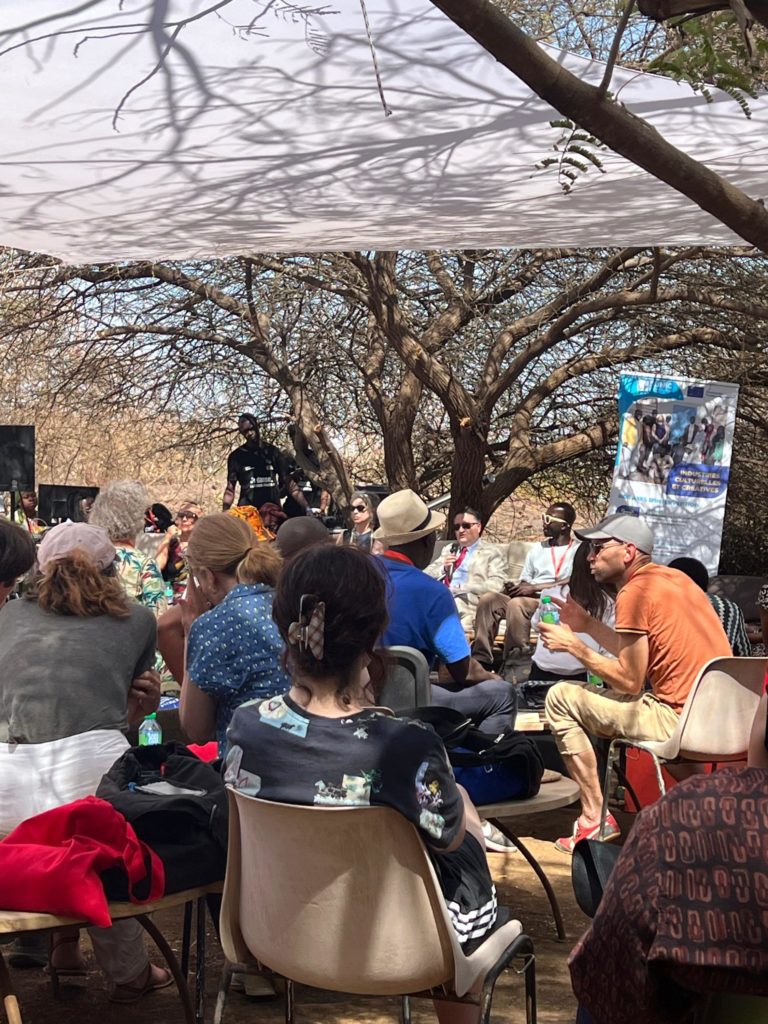
The Biennale de la Danse brought together an international network of artists and institutions working in contemporary dance. For Camille, it was also an opportunity to discover L’École des Sables, the legendary dance centre founded by renowned choreographer Germaine Acogny and her husband,Helmut Vogt.
Seeing Germaine Acogny in person was on Camille’s personal bucket list. “She is such an important figure in contemporary dance. Just being there, in that environment, felt meaningful.”
The Belgian delegation included representatives from Théâtre National Wallonie-Bruxelles, Charleroi Danse, and several artists and cultural workers from Belgium’s dance sector. Among them was Siham Ennajary, a Get Down-supported artist selected through an open call organised by Wallonie-Bruxelles Théâtre Danse, represented on the trip by Séverine Latour. For Camille, Siham’s presence made the trip feel even more coherent. “It made sense for us to be there together, to network together and to present Siham’s work to the people we met.”
Dance as Transmission
One of the most powerful moments of the trip came during a performance by dancer and choreographer Dexter, known for his work in Krump as a co-choreographer (with Hendrickx Ntela) and dancer in Blind, a performance distributed by Get Down.
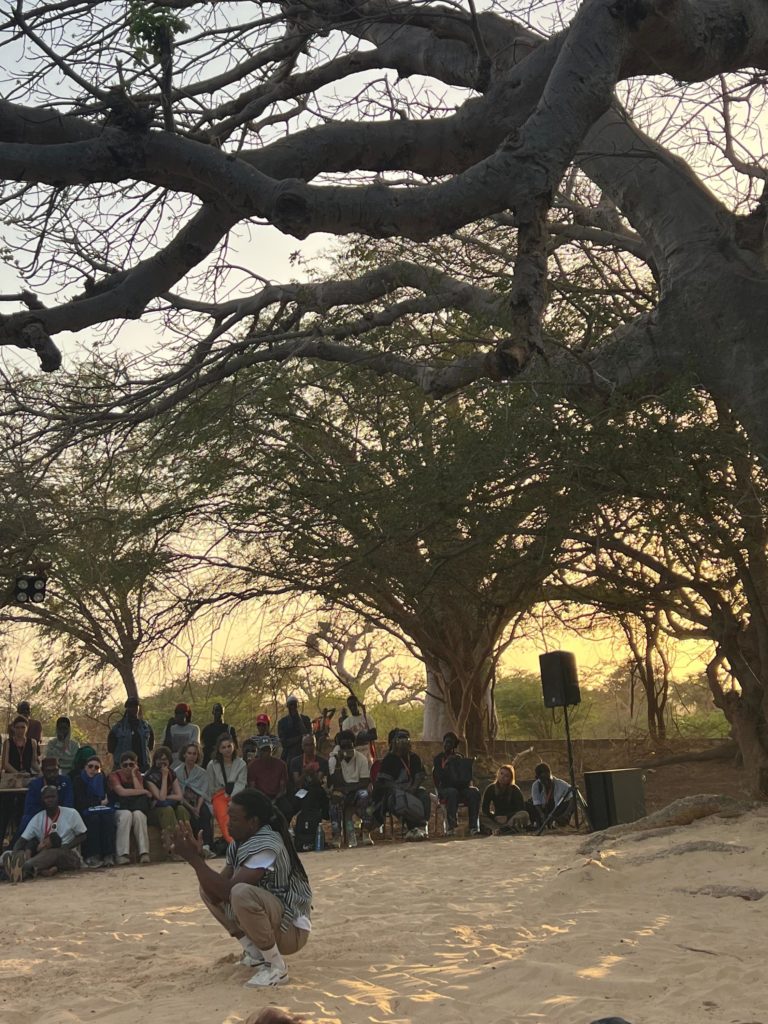
His solo, Griot – Part I, was performed outdoors beside a massive baobab tree—a setting rich in spiritual and historical meaning. In many West African traditions, griots are storytellers, poets, and keepers of memory who pass on wisdom through voice, music, movement, and oral history. Dexter is currently working with Art Track (Lucie Lelaisant) for his distribution and production.
For Camille, the piece became far more than a dance performance. “It felt magical, spiritual, historical. It was not just someone dancing.” The image stayed with her: movement in the sand, beside the baobab, under the Senegalese sky—dance becoming memory, ritual, and transmission all at once.
Building Connections Organically
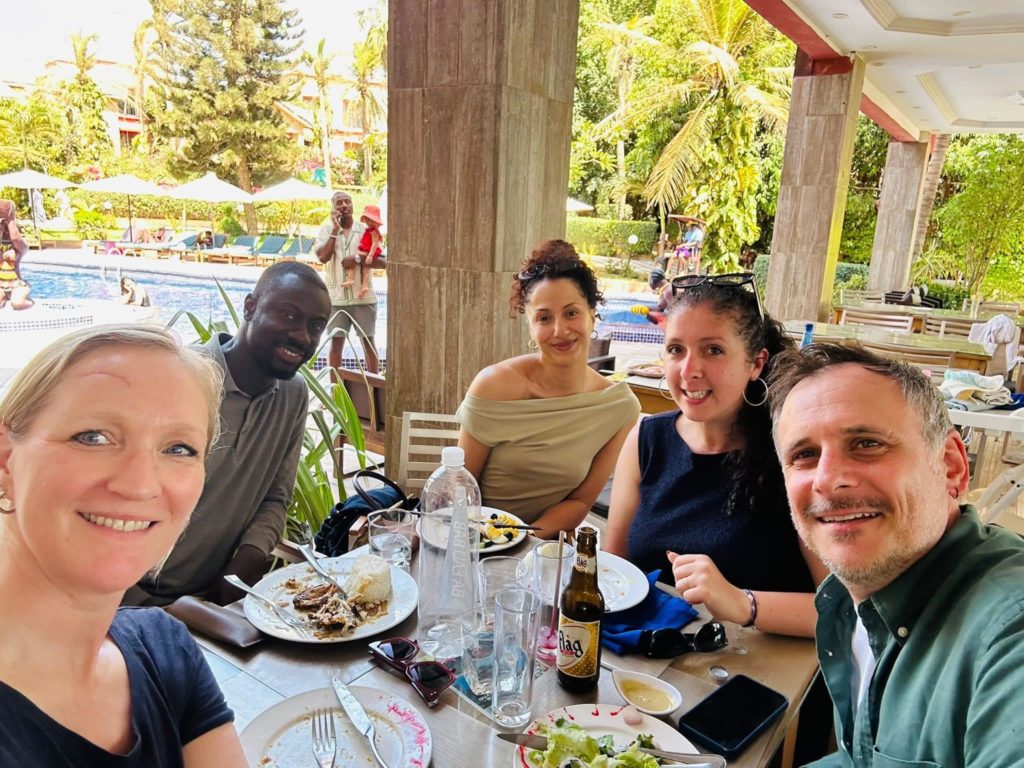
Networking was one of the trip’s main goals, but Camille quickly realised that her way of connecting does not follow traditional professional formulas. Instead of scheduling endless formal meetings, she let encounters unfold naturally. “I prefer organic connections,” she explains. “Human first, then professional.”
That approach led to meaningful exchanges with artists, programmers, and cultural workers from Cameroon, Congo, Chile, London, Mozambique and Netherlands. Some conversations happened over breakfast; others unfolded in queues, after performances, or during discussions.
For Camille, these encounters reaffirmed something essential about her way of working: “I believe in planting seeds. You never know where a connection will lead later.”
Reflection, Doubt and Staying True to Yourself
Beyond the performances and professional meetings, the trip also became a moment of personal reflection. Camille speaks openly about moments of doubt—wondering whether she was networking “correctly,” whether she was proactive enough, and whether her softer, more intuitive way of working had a place in professional spaces.
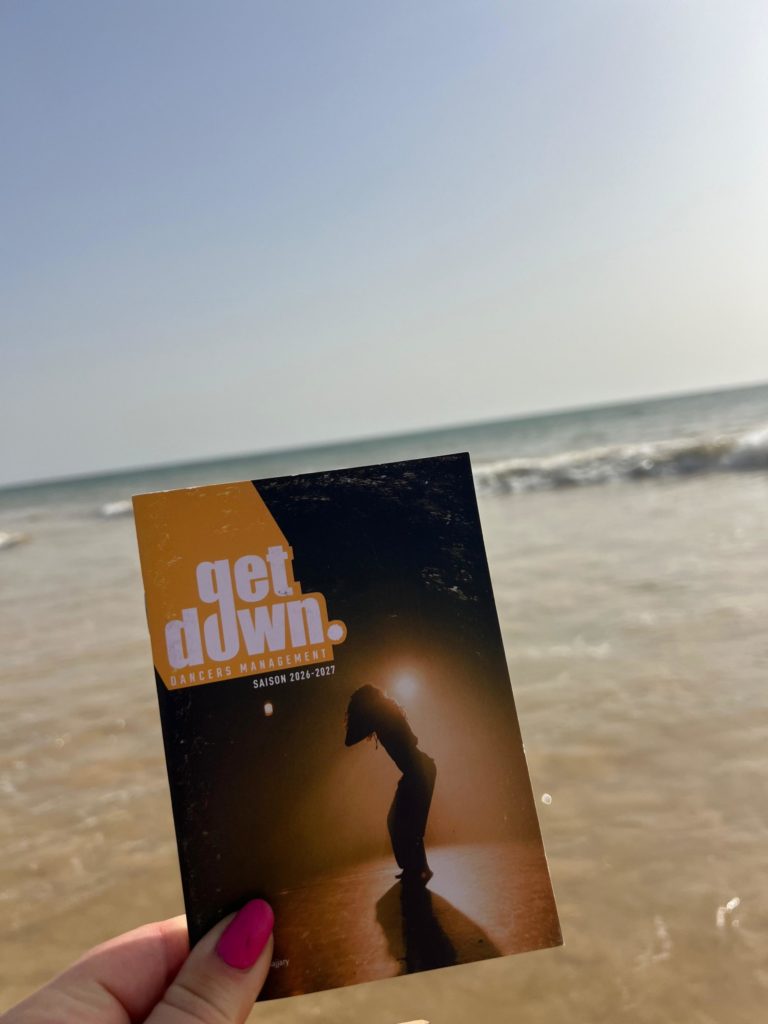
By the end of the trip, she had reached an important conclusion. “I stayed true to myself,” she says. “That’s something I’m proud of.” Before travelling, Camille had also prepared a new brochure presenting the artists supported for the upcoming season. Distributed throughout the Biennale, it received an enthusiastic response from attending professionals. “It confirmed that it was the right decision,” she says. “People really connected with it.”
More Than a Professional Trip
Although the stay lasted only five days, the experience left a lasting mark. Through conversations, performances, reflection, and encounters, the journey to Biennale de la Danse at école des Sables became more than a professional mission.
It became a reminder of what lies at the heart of this work: creating spaces where artists, cultures, and people can truly connect. And sometimes the most important things begin exactly there, in the sand, beside a baobab tree, in a conversation between strangers who may one day become collaborators.