STEP by STEP: How Get Down Is Supporting ‘Emerging’ Dance Artists Beyond the Stage
Inside Get Down’s new STEP sessions and why personal guidance matters for artists, dancers, and choreographers
Behind every powerful performance, every bold movement and every artistic breakthrough, there is often something audiences never see: uncertainty, planning, difficult decisions and countless questions.
How do you turn an idea into a production? Who should you contact? How do you build a network, find partners, secure funding, or organise the chaos of ideas inside your head? For many emerging artists, these questions arrive long before visibility does. That is where Get Down’s STEP sessions come in.
More Than Coaching: What Are STEP Sessions?
At first glance, STEP may sound like a coaching programme. But for Camille, coordinator of Get Down, the word “coaching” does not quite capture what these sessions are about.
Instead, STEP: short for Sustaining Talent & Potential is built around something more human: personal guidance. Created in response to increasing requests from artists seeking advice, STEP sessions offer individual support for dancers, choreographers and movement-based artists navigating their artistic journey.
While Get Down already works closely with selected artists over the long term, Camille noticed something important: many artists outside that circle were reaching out, searching for direction, feedback or simply someone who understood the realities of artistic creation. “Sometimes artists just need time, space and someone who understands the field,” is the spirit behind the initiative.
Rather than committing to long-term support, STEP creates space for more focused moments of guidance. Artists can book either a one-time session or a short series of sessions, depending on their needs and project stage. In many ways, STEP fills the gap between isolation and long-term mentorship.
A Space for Questions, Strategy and Clarity
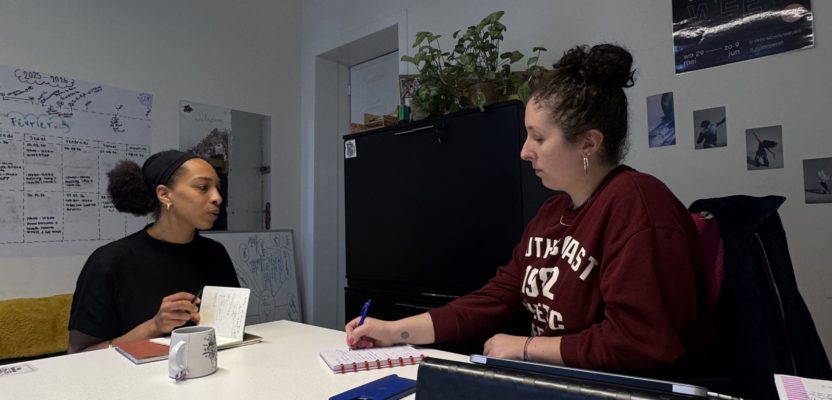
So, what actually happens during a STEP session? The answer is refreshingly simple: it depends on the artist. There is no rigid formula or one-size-fits-all roadmap. Every session begins with questions. What is the artist’s intention? What are their goals? What challenges are blocking progress? What needs clarity?
From there, sessions unfold according to what the artist truly needs.Sometimes that means discussing career development or artistic identity. Other times, the conversation shifts toward production timelines, partnerships, funding opportunities or navigating the realities of distribution in the performing arts. For many artists, one of the biggest struggles is transforming creative vision into practical action.
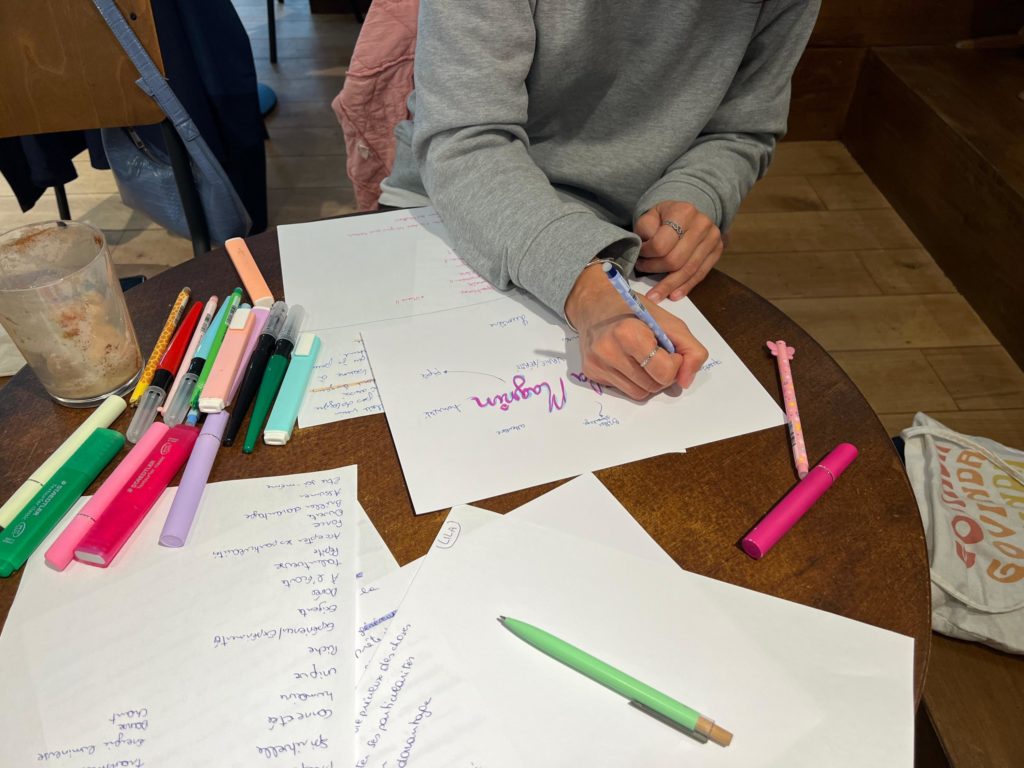
STEP helps bridge that gap. Mind maps, structured discussions, strategy exercises and practical feedback become tools to organise ideas into concrete next steps. By the end of a session, artists leave not only with thoughts but with direction.
Sometimes that direction looks like a clear action plan. Sometimes it is a refined network strategy, feedback on a presentation file or budget, or simply a sharper understanding of priorities.
And occasionally, the biggest outcome is something quieter but equally valuable: mental clarity. As Camille explains, artists often leave relieved to finally place everything “on the table” and better understand what comes next.
The Hidden Challenge of Being an Artist
One of the most fascinating insights behind STEP is the recognition that being an artist is not only about creating art. It is also about administration, communication, planning, funding, partnerships and strategy.
For emerging artists, this invisible side of creative work can feel overwhelming.
Distribution, in particular, presents challenges. According to Camille, a common mistake among beginners is assuming success comes from contacting as many people as possible. In reality, building meaningful connections requires research, patience and precision.
A theatre is not simply a venue. A programmer is not simply a contact. Behind every institution are people, visions and values. The question is not only who I should contact? But why this person, at this moment, for this project? STEP sessions encourage artists to think more strategically, understanding how to approach partners, adapt communication and build relationships that make sense for their artistic vision. Rather than chasing every opportunity, artists learn how to recognise the right ones.
Guidance, Not Perfection
One thing that makes STEP especially refreshing is its honesty. Camille does not position herself as someone with all the answers. Instead, she describes herself almost like a “general practitioner” for artists: someone who can listen, guide, offer tools and, when necessary, point people toward specialists.
Whether discussing budgets, presentation files, funding structures, press relations or distribution strategies, the focus is never perfection. It is progress. Templates are shared. Feedback is offered. Questions are explored.
But importantly, the work always stays in the hands of the artist. STEP is not about doing the work for someone. It is about helping artists better understand how to do it themselves. That distinction matters.
Why One-on-One Guidance Matters Today
In a creative world increasingly shaped by pressure, speed and visibility, personal guidance can easily feel like a luxury.
STEP quietly argues the opposite. For artists balancing creative ambition with uncertainty, having someone who listens, challenges ideas and helps structure possibilities can become a powerful turning point. The sessions are not designed to replace experience, nor to guarantee success. Instead, they function as one additional tool, a moment of support in an often-fragmented artistic ecosystem.
And sometimes, that moment makes all the difference. Not because every answer suddenly appears, but because the path forward becomes clearer.
A Small Initiative with Big Meaning
For now, STEP remains intentionally small. Get Down plans to host only a limited number of sessions each month, ensuring that personal guidance does not overshadow its long-term mission of supporting artists over sustained creative periods.
It is not about scaling endlessly or becoming a coaching factory. It is about quality, care and meaningful exchange. In a sector where artists are often expected to simply “figure it out,” STEP offers something rare: time, attention and practical guidance grounded in lived experience.
Conclusion: One Step Closer to Clarity
Artistic journeys rarely move in straight lines. They unfold through experiments, doubts, missed opportunities, bold risks and moments of unexpected growth. Sometimes, what an artist needs most is not another opportunity, but someone willing to sit beside them and ask the right questions.
That is the quiet strength of STEP. At its heart, Get Down’s initiative is not simply about coaching careers or building stronger projects. It is about helping artists reconnect with clarity, confidence and intention, one conversation at a time. Because sometimes growth does not happen in giant leaps. Sometimes, it begins with a single step.
Photo: STEP session with Camille, for Maya Balam Meyong (Dancing Society Company)